Mimi Smith (b. 1942, Brookline, MA) is an American visual artist. Smith received her BFA from Massachusetts College of Art in 1963 and her MFA from Rutgers University in 1966. Smith is a pioneer in early feminist and conceptual art focusing on clothing sculptures, drawings, paintings, installations, performances, and objects. Smith's interventions reinterpret domestic and quotidian objects to engage social commentaries rooted in relatable everyday experiences. Smith lives and works in New York City.
Smith’s work has been exhibited extensively throughout the United States and internationally, including the seminal exhibition WACK! Art and the Feminist Revolution (2007) at MOCA, Los Angeles, CA and PS1 Queens, NY, curated by Connie Butler. Additional exhibits include a retrospective, Steel Wool Politics, ICA Philadelphia, PA; a survey show at Ramapo College, NJ; Lines of Resolustion: Drawing at the Advent of Televison and Video, Menil Drawing Institute, Houston TX; Televsion Drawings, Art Center Waco, TX; Building Blocks, RISD Museum, Providence, RI; Artwear, Fine Arts Museums of San Francisco, CA; Addressing the Century, 100 Years of Art and Fashion, Haywood Gallery, London; Committed to Print, MoMA, NYC; and solo shows at Luis De Jesus Los Angeles and Anna Kustera Gallery, NYC; among others. Public collections include the Arkansas Museum of Fine Arts, Little Rock, AR; Baltimore Museum of Art, Baltimore, MD; Espace muséal d’Andenne, Namurs, Belgium; Fogg Art Museum, Harvard Art Museums, Cambridge, MA; Franklin Furnace, Brooklyn, NY; J. Paul Getty Museum, Los Angeles, CA; Institute of Contemporary Art, Tokyo, Japan; Menil Drawing Institute, Houston, TX; Museum of Art, Rhode Island School of Design, Providence, RI; Menil Collection, Houston, TX; Museum of Modern Art, New York, NY; National Museum of Women in the Arts, Washington, DC; Newark Museum of Art, Newark, NJ; Spencer Museum of Art, Lawrence, KS; The Walker Art Center, Minneapolis, MN; Weatherspoon Art Museum, Greensboro, NC, among others. She has been the recipient of grants from the National Endowment of the Arts, the New York Foundation on the Arts and the Joan Mitchell Foundation. Among the many publications that have written about her work are Artforum, Art in America, Art News, Frieze, and Time Out magazines, as well as The New York Times and Dallas Morning News.
Artwork
Clothing sculptures
During her graduate studies at Rutgers, Mimi Smith began making sculpture that utilized clothing as both content and form. Smith’s early works were prescient of feminist and clothing art and predicted the feminist artists fascination with clothing as an extension of the body. [1] Using the autobiographical as a point of departure, her work often parallels everyday moments. [2] In 1965, she produced Recycle Coat, Model Dress and Bikini. These works were made of plastic, an important material for Smith. In 1966, she produced a room- size installation called The Wedding for her thesis show at Rutgers University. Designed as a plastic box that viewers were not permitted to enter, it contained a plastic wedding gown with a thirty-foot train. Within the next year she was to create her signature piece Steel Wool Peignoir. [3] About the piece Smith said, “Growing up in the 1950s, I associated peignoirs [with] storybook romance... steel wool, however, was the stuff of everyday life... I felt that [the materials] combined the reality of my life with the romance of what I thought it would be”. [4] That same year she made Maternity Dress and Girdle. These pieces were also prescient in their acknowledgment that fashion is part of what helps to construct women’s individual and social identities. [5] In 1968 Smith made a conceptual piece about her own pregnancy that played on the idea of knitting baby clothes. Knit Baby was conceived as a knit-your-own-baby kit, with instructions to enable any woman, or man, to knit themselves a baby. [6]
Knotted thread and tape measure drawings
Smith moved with her husband and two children from New York City to Cleveland, Ohio in the early 1970s. During this time, Smith created a series of wall drawings that replicated furniture, architectural features, and rooms in her home using knotted thread and tape measures to mark their precise dimensions. [6] With this series, Smith used the fundamental parameters of conceptual art to tell her own story. When exhibited, the individual works are arranged on gallery walls in a ghostly reproduction of the domestic sphere. In a review of Smith’s solo show at Kustera Tilton Gallery in 1999, art critic Roberta Smith wrote “These wall drawings combine elements of high conceptualism with instant accessibility and a feminist viewpoint”.
Installation art and artist books
Smith and her family moved back to New York City in the mid 1970s. At this time, Smith’s work began to focus on installations and drawings about television news, the environment and nuclear threat. Installations ranged in size and included individual drawings hung directly on the wall to ten-foot tall paper houses suspended from the ceiling. These works often included audio of the artist reciting the daily news accompanied by her own phrases. [3] [6] Simultaneously, she began making artists books and in 1983 she published This is a Test with Visual Studies Workshop. This is a Test was produced in an edition of 700 and deals with nuclear disaster told through television news. [8]
Recent clothes and drawings
From the 1990s to the present, Smith has returned to clothing sculpture [9] [10] producing pieces that comment on the lives of women in the workplace and the military (Slave Ready Corporate, 1993, To Die For, 1991, and Camouflage Maternity Dress, 2004) as well as illness, the environment and aging (Protectors Against Illness, and Coverings for an Environmental Catastrophe). Continuing with her drawing practice, Smith’s ongoing series, Timelines [3] tracks the aging process of a woman through her clothes. Consisting of individual drawings displayed in a line, each Timeline depicts a specific article of clothing viewed from birth to seventy-nine, the average life expectancy of a woman.

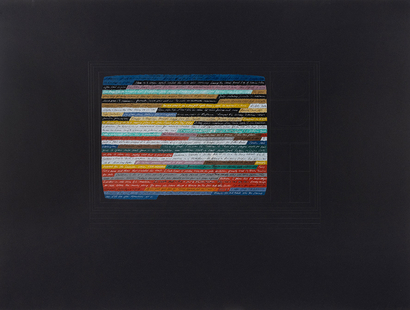
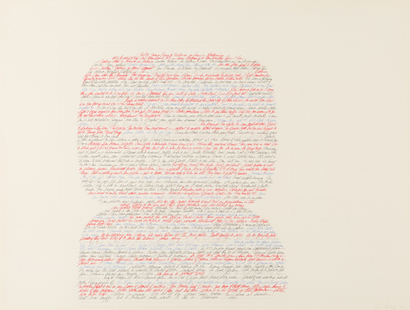
Produced during the 1970s and1980s, Mimi Smith’s Television Drawings were created before the advent of 24-hour news channels and encapsulate the artist's desire to relate her work to her life and ours. She recalls, “I began to do these drawings because the constant information of the world invading my studio and home was not avoidable. However, I was still involved with the basic theory of relating my work to experiences in a society that are shared by many people.”

The Weatherspoon Art Museum at the University of North Carolina Greensboro will receive a gift of 270 contemporary artworks and funding worth $5 million from Carole Cole Levin, a North Carolina-based artist and philanthropist.
The gifted works represent around 140 artists, the bulk of whom were born in the U.S. and half of them born before 1950, and will start to be exhibited in spring 2025. Separate funding will also allow the museum to renovate its building and establish an arts and humanities center in Levin’s name. It is set to open 2026.

Luis De Jesus Los Angeles is thrilled to announce the Baltimore Art Museum's acquisition of Mimi Smith's sculpture "Don't Turn Back", 1985. Our congratulations to Mimi Smith and our sincere appreciation to Jessica Bell Brown, Curator and Head, Department of Contemporary Art, Baltimore Museum of Art; Asma Naeem, The Dorothy Wagner Wallis Director; the curatorial team, as well as the Contemporary Accessions Committee and the Board of Trustees.

The Myth of Normal: A Celebration of Authentic Expression looks at societal norms that have been codified over our collective past. Focusing on the achievements of MassArt’s alumni, this exhibition is guest-curated by Mari Spirito ’92, Executive Director of Protocinema, on the occasion of the 150th anniversary of Massachusetts College of Art and Design.
Miami Beach Convention Center hosts the flagship event. One of the first stops was the solo exhibition Breaking News, by New York artist Mimi Smith Luis De Jesus Los Angeles presented this exciting exhibition. The mini-retrospective of her nearly six decades of artistic creation addressed topics that continue to be relevant to conversations years later
By Brooke Harker
One of my first stops was the solo exhibition Breaking News, of NY based artist Mimi Smith. Luis De Jesus Los Angeles presented this stirring exhibit. The mini-retrospective from her nearly six decades of making art addressed topics that continue to be relevant to conversations years later. A pin stripe suit hung on the wall trimmed in steel wool was a the central part of the installation, “Slave Ready Corporate.” Mimi Smith is the first known woman to use clothing in sculpture to communicate her shared experience of being a woman.
By Sarah Cascone
Is it finally time for Mimi Smith to get her due? The 82-year-old feminist artist’s mini retrospective at Art Basel Miami Beach with Luis De Jesus Los Angeles fittingly features a suite of sculptures made from clocks, with references to pressing social issues added to each hour.
By Maximilíano Durón
Mimi Smith, an artist associated with the feminist movement of the 1970s, offers one of the most striking showings in the Survey section, for historical presentations. On view are several of her “Television Drawings,” dense transcriptions of the morning and evening news broadcasts from the 1970s and ’80s that are framed within renderings of TV sets from the era.
Luis De Jesus Los Angeles presents Mimi Smith’s first West Coast solo exhibition, “Head-On,” which includes sculptures, paintings, and drawings that span the pioneering artist’s six-decade career. Predating the feminist art movement of the 1970s, Smith’s bold work excavated the nature of womanhood and domesticity before it was popular.
Mimi Smith has spent a lifetime making art that integrates her personal life with the tumult and beauty of the surrounding world. Over the past fifty years, Smith has been making artwork as an archive of our struggle to survive and maintain our humanity, addressing the environment, nuclear war, AIDS, terrorism and feminism (before the word was commonly used) in compelling mixed media works, which she considers sculptures.
For the past three years, Mimi Smith (pronounced Mim-ee) has been part of the Joan Mitchell Foundation’s Create A Living Legacy (CALL) Initiative, working with legacy specialists Allison Schooler, Catherine Czacki, and Denise Schatz to collect information on the artist’s personal archive of artwork and documentation. This project has resulted in an active database of the artist’s works, one that links information and images of her extensive inventory of drawings, installations, and sculptures with the physical location of those pieces in the artist’s studio.
Mimi Smith says of her art, “I consider my work to be feminist, social, and conceptual, sculpture and drawing. Although my earliest work from the ‘60s was feminist in both a personal and political sense, there was no available vocabulary for it at the time and it often was misunderstood when I first made it. The word feminism was not a word in my own vocabulary until the early ‘70s, and then its ideas and actions inspired me with hopes and ambitions for things I had not previously imagined or even considered.”
Mimi Smith is a really interesting artist who probably isn’t as well-known as she deserves to be. She started working in the 60’s, and she actually made this dress for herself when she was pregnant, which is kind of amazing. At the time, women’s maternity dresses were very different than they are today; most of them were very full, flowing, they had Peter Pan collars. The idea was to obscure that you were pregnant, basically, as opposed to today, where you see women with very form-fitting maternity clothes. It’s prescient in the sense that here she has placed a clear bubble over the area where the baby is, so that she’s really drawing attention to it and saying, “There’s a baby in here; I want you to see it.”
Chatting with Smith, who’s soft-spoken and self-deprecating, is congruent to the experience of her artwork; her creations, unassuming at a glance, have a sharp undercurrent of ferocity and critique. Smith is best known for her ‘clothing art’ produced during the sixties, the exemplar being “Steel Wool Peignoir” (1966), a negligee comprised of steel wool and lace, a brutal deflation of marital romance vis-à-vis domestic drudgery.
Smith's and Bee's art makes us laugh at the idiocy (the fears and myths) informing the male homosocial codes legislating women's repression, while asserting a feminist blockage of the conventional male humor perpetuating the history of women's persecution and enforcing a code of female homosocial norms in sync with male supremacy.
NJCU is currently displaying artwork by Mimi Smith, an acclaimed artist that has been doing artwork since the 60s, which was later categorized as “Feminist Art.” The name of the show is named “Constructing Art About Life.”
Like a fierce but soft-spoken warrior who reveals our foibles rather than causing us harm, artist Mimi Smith (b. 1942) has spent more than four decades creating objects that interrogate the pressing social and political concerns of our time, from women’s work and social conformity to nuclear holocaust, without flinching, and with a focused gaze. From her pioneering signature clothing sculptures to installations, artist books, and readings from the evening news, Mimi Smith uses what is around her in both intimate and prescient ways, connecting our daily lives to the important, difficult and sometimes life-threatening issues of our era. But despite the exquisite clarity of her work’s incisive merging of form and concept, her art has not always been adequately understood.
Mimi Smith is best known for her clothing pieces made in the early 60s. Steel Wool Peignoir (1966), a see-through dressing gown luxuriously trimmed with thick rolls of steel wool and lace, was an early example of a literalist form of slapstick humour deployed by Feminist artists of the 70s. So too was Maternity Dress (1966), a silver-vinyl micro-mini worthy of Edie Sedgwick, complete with a see-through plastic moulded dome that fits over the belly. Although both works provoke a kind of dopey, out-loud laughter, responses to them provided early indications of social analyses of Feminist art.
The retrospective exhibition of the fabric art of Mimi Smith at the Anna Kustera Gallery in New York last year received critical acclaim in the press. Smiths seminal sixties clothing sculptures garnered the most notice. "Her interest in how clothes relate to a woman's pysche has become the theme of many younger women artists' work, but Ms. Smiths wry approach to the subject is still very much her own," wrote Grace Glueck in The New York Times.
Mimi Smith's art seems to function as a shield, not only for the absent bodies it evokes, but against some of Smith’s deep-seated rage. Her sculptures can be seen as a series of responses, a wry acknowledgment of pressing issues. As if in anticipation of an atomic blast, Smith recently stitched up a group of handy coverings for the postnuclear body: steel-wool mask, chaps, and wigs. Medications for breast cancer patients have been tooled into sexy undergarments. Taken one body of work at a time, Smith’s art may seem to lack the continuity on which commercial success depends, but this collective debut showed that it has never lacked bite.
Light-handedly exploring domestic and other issues for some 30 years, Mimi Smith has transformed clothes, clocks, computer-screen images, furniture and other everyday objects into things that tweak the psyche.
“Steel Wool Politics,” the title of the Mimi Smith (b. 1942) retrospective at Philadelphia’s Institute of Contemporary Art, inevitably conjures up the image of one of Smith’s best known works, Steel Wool Peignoir (1966; Fig. 1). Made 30 years ago, the garment is constructed of sheer pink nylon and eggshell laced edged with thick furry bands of steel wool. The frothy wire looks dainty and rich enough to ornament an elegant boudoir garment, but steel wool discourages intimacy as it suggests an inappropriate “feminine” context: not the fantasy bedroom but the work-a-day kitchen.
It seems to be standard practice in our technological culture to perceive politics and daily life as separate and unrelated aspects of society, and thus to abstract large social issues from the effect they have on personal existence. But I’ve noticed that since the advent of the women’s movement, thanks to feminist research in this direction, more and more people have recognized that such a schism is unrealistic, and have begun to explore—through artistic and other means—the ways in which public policies and private lives are interconnected. The artist Mimi Smith is one such person; these connections are the subject of her installation House with Clouds.